Supreme Court confirms a criminal amparo is inadmissible because it did not state the facts
The full Court confirmed that the filing had no statement of facts and did not identify the constitutional guarantees allegedly violated, two requirements of the Judicial Code.
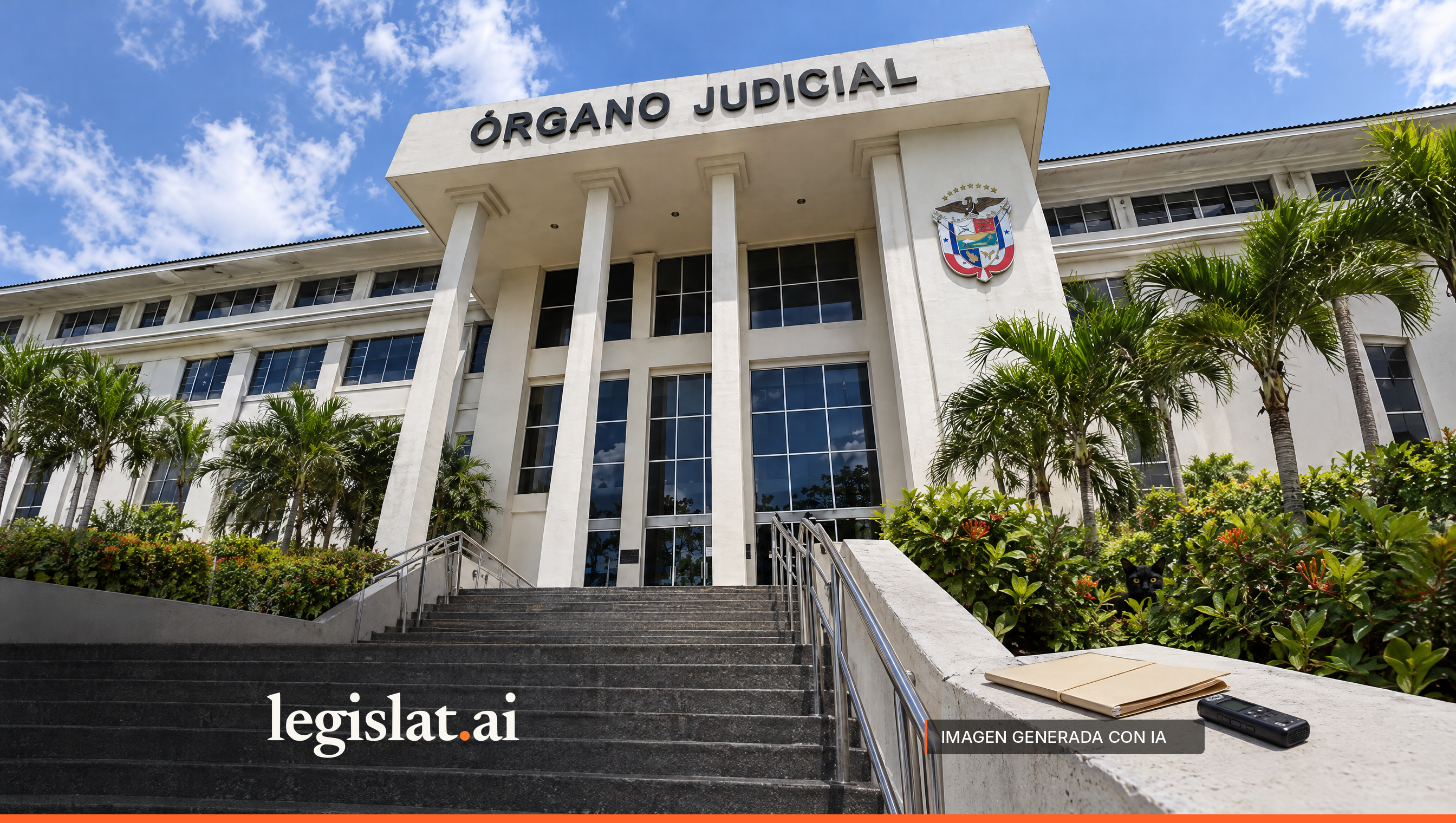
The full bench of the Supreme Court of Justice upheld, in a ruling dated September 16, 2026 (Entry 106875-2026), the decision of the First Superior Court of the First Judicial District that did not admit a constitutional amparo against Order Opening Oral Trial No. 036-26 of February 19, 2026, issued by the pretrial judge (jueza de garantías) of the First Judicial District of Colón province. The ruling became final on October 30, 2026.
The Superior Court had rejected the complaint because, although it recounted what happened at the intermediate hearing, it did not show the link between the challenged act and the alleged violation of rights, or the seriousness and imminence of the harm. On appeal, the defense argued that the facts were clearly set out, that the link appeared in the audio recording of the February 11, 2026 hearing and that it had invoked conventionality control with case law from the Inter-American Court of Human Rights.
The full Court recalled that admitting an amparo requires compliance with the formalities of Articles 101, 2615, 2616, 2618 and 2619 of the Judicial Code, Article 384 of the Civil Procedure Code and Articles 54 and 207 of the Constitution. After reviewing the filing, it concluded that the complaint lacked a statement of facts, did not identify the constitutional provisions allegedly violated and did not explain how they were violated. It thus failed to meet paragraph 3 of Article 2619 of the Judicial Code, which requires stating the facts on which the claim is based, in line with paragraph 6 of Article 384 of the Civil Procedure Code, which calls for an orderly statement of the facts.
For trial lawyers, the ruling reiterates that the Court will not make up in an amparo for the lack of an orderly account of the facts: referring to a piece of evidence, such as the audio of a hearing, does not replace that section. The standard could carry particular weight in amparos against decisions taken at criminal hearings, where the defense often relies on recordings.
The ruling does not examine the merits of the claims or affect the criminal case, which continues toward the oral trial. According to Sentinel Legal, Article 2619 of the Judicial Code is in force in its original wording. Nexo Capital will follow case law on the admissibility of amparo.
Research assisted by Sentinel, with editorial verification of official sources. Discover Legislat.ai